
 Back to list
The “Unmanned Helicopters” Design Bureau is developing its own turboshaft engine, the KB-150, which will become the powerplant for unmanned helicopters of a substantially large size category.
The project is intended to address the shortage of reliable powerplants for heavy unmanned helicopters, and to ensure independence from external suppliers—whose deliveries involve significant politically and economically driven risks.
The KB-150 engine has a power output of 150 kW. This will allow an unmanned aerial vehicle with an estimated takeoff weight of about 750 kg to reach speeds of up to 190 km/h and carry out flights lasting up to 4 hours.
A special achievement of UAVHELI engineers is the development of their own electronic digital engine control system (FADEC).
The presence of the FADEC system makes it possible to optimize fuel consumption in all flight modes, provide automatic engine protection against operation beyond permissible parameter limits, and also simplify diagnostics and condition monitoring of the unit.
Among the key features of the new engine is a substantial time between overhauls of 1,000 hours, which is critical for commercial UAV operation in a 24/7 mode.
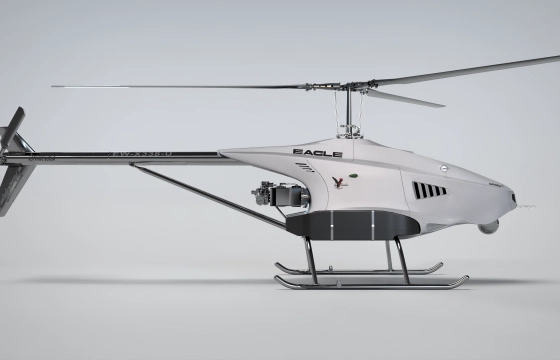
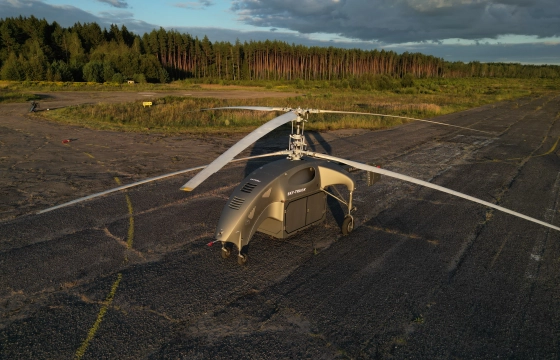
The engine is planned to be used on the new helicopter-type UAV Eagle, which is also being developed by the “Unmanned Helicopters” Design Bureau.
Creating an engine of this class places UAVHELI among only a few global aircraft manufacturers capable of delivering a complete production cycle for unmanned systems—from propellers and the airframe to the most complex powerplants and software.